The Truth About Hippies and Consumer Culture

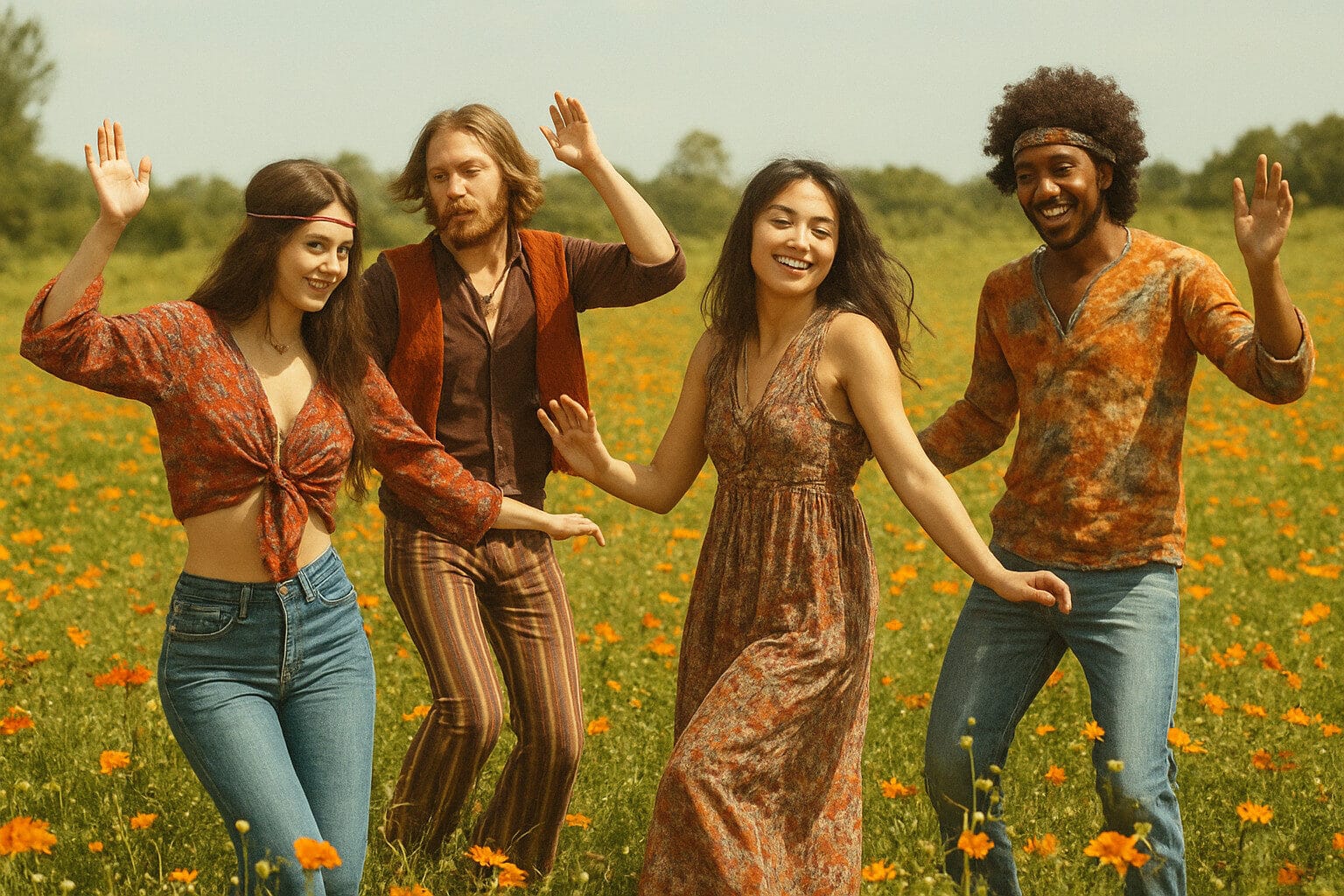
Some people still toss around the word “hippie” like it is a sneer. The implication is that if you care about peace, love, equality, or nature, you must be soft, naive, or stuck in some nostalgia. But if you lean in, you see something poetic… What exactly are they mocking? The 1960s and 70s hippie counterculture prioritized nonviolence, generosity, and unity; they rallied behind “Make love, not war” and promoted openness as an antidote to the rigidity of middle-class society (Encyclopaedia Britannica, 2025).
That brings us to the heart of the matter: who benefits from making hippie values seem silly or outdated? The answer is starkly clear; economic systems built on consumption. The hippie critique was that relentless buying doesn’t lead to fulfillment. They looked at a society hooked on stuff and said, essentially, “that’s not all there is.” According to a humanities study, hippies sought communal alternatives and anti-materialist spiritual paths precisely to escape that logic (Ashbolt, 2018).
Their vision wasn’t fringe. Data shows that personal consumption expenditure now makes up about 67.7% of U.S. GDP, reflecting the central role of consumerism in maintaining economic growth (U.S. Bank, 2025). If enough people chose sharing over buying, growth paradigms shift dramatically. That’s why “hippie” is often used to dismiss critiques—because a mass shift toward communal care threatens the bottom line.
Here’s a wild irony: many ideals born in the counterculture now fuel billion-dollar industries—organic food, wellness, environmentalism, mindfulness, tech innovations in personal computing. Countercultural values were commodified and absorbed into the very system they critiqued.
Let me be plain: calling peace and cooperation “lame” isn’t neutrality. It’s a reflex of a culture divorced from community. It’s easier to laugh at non-violence than confront the truth that endless growth is unsustainable. Every sneer at communal living or intentional simplicity is a defense of entrenched systems.
If being a hippie means wanting less war, more connection, and more care—that’s something to claim with pride. Hippie isn’t an insult. It’s an echo of solidarity. And as long as consumerism whispers our worth is in what we own, that whisper is worth answering. Maybe the truly radical act today is simply: to love.
References
Ashbolt, A. (2018). We Can Be Together: Hippie Culture as Radical Community. Counterculture Studies, 1(1), 48–63. Retrieved from https://ro.uow.edu.au/ccs/vol1/iss1/5
Encyclopaedia Britannica. (2025). Hippie: History, Lifestyle, Definition, Beliefs. Retrieved from https://www.britannica.com/topic/hippie
U.S. Bank. (2025). Consumer Spending: The biggest driver of the economy. Retrieved from https://www.usbank.com/investing/financial-perspectives/market-news/consumer-spending.html